Stock optimization5 min read
Valuing Inventory with Weighted Average Cost: A Practical Explanation with an Example
How the average cost changes with every receipt, how returns and write-offs affect it, why costs should be visible only to authorised roles, and how to read an inventory valuation report.
MIRSAD Editorial Team
Practical content on inventory and warehouse management

"What is our stock worth today?" sounds like a simple question, but the answer depends on how you cost each unit. You might buy the same product at one price this month and another price next month, and the units on the shelf carry no label saying what was paid for them. Weighted average cost is one of the most widely used methods in inventory management because it is clear and easy to apply. This article explains it with an illustrative example, covers the effect of returns and write-offs, explains why costs need permissions, and shows how to read a valuation report.
What is weighted average cost?
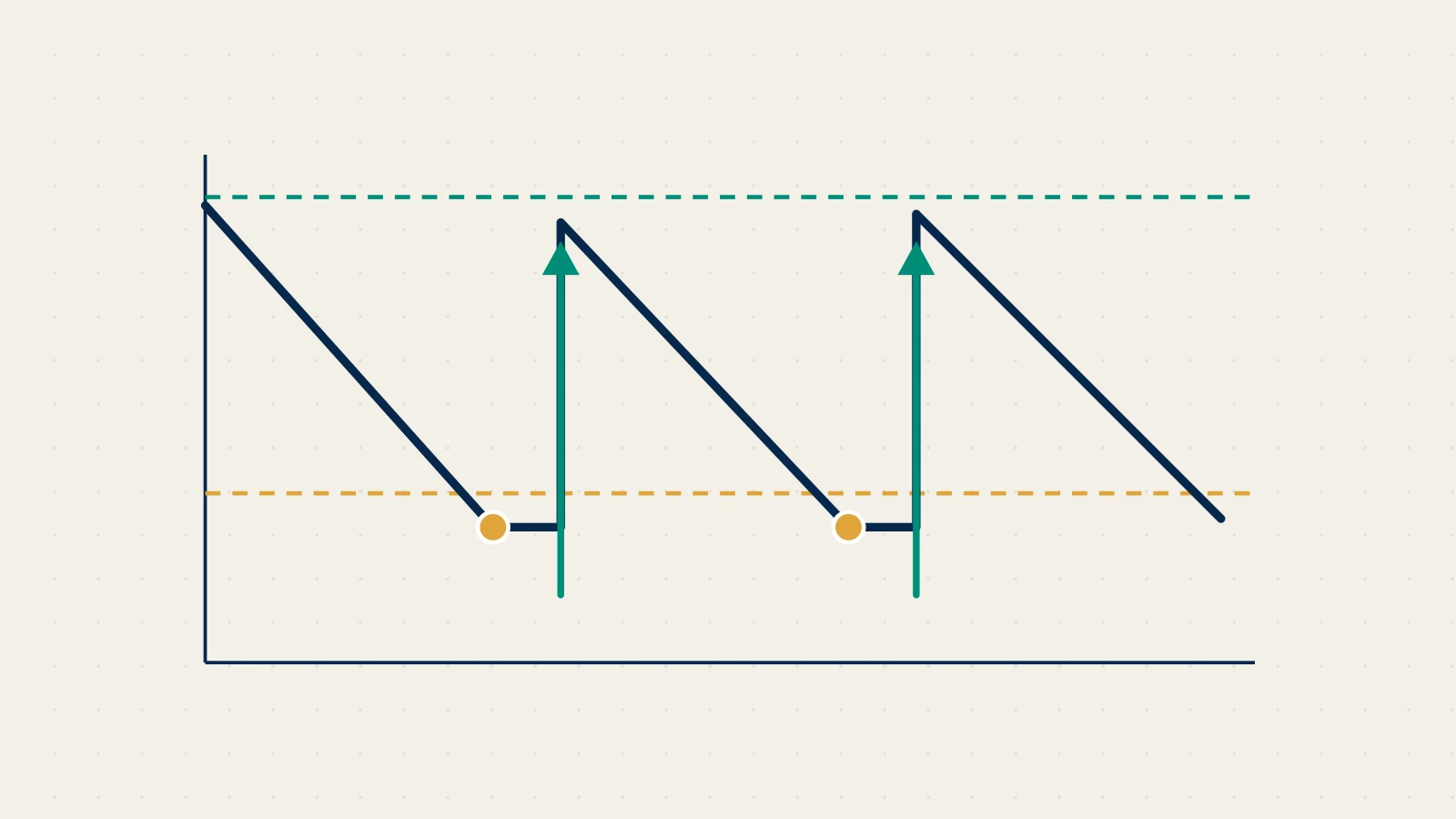
The idea is that all identical units of a product in stock carry a single cost: the average of what you paid for them, weighted by quantity. With every new receipt, the average is recalculated:
New average = (value of current balance + value of quantity received) ÷ (current quantity + quantity received)
Issues do not change the average. Units leave at the current average cost, so quantity and value fall in the same proportion.
An illustrative example: how the average moves
The figures below are a simplified illustrative example for one item in one warehouse, in Saudi riyals:
- Opening balance: 100 units at SAR 10 each, so the balance is worth SAR 1,000 and the average is 10.
- New receipt: 50 units at SAR 13 each, i.e. SAR 650. The balance becomes 150 units worth SAR 1,650, and the new average is 1,650 ÷ 150 = SAR 11.
- Issue: 60 units at the current average of 11, leaving with a value of SAR 660. 90 units remain, worth SAR 990, and the average is still 11.
- Another receipt: 30 units at SAR 12, i.e. SAR 360. The balance becomes 120 units worth SAR 1,350, and the average is 1,350 ÷ 120 = SAR 11.25.
Notice that a receipt above the average raises it, a receipt below the average lowers it, and an issue leaves it unchanged. At any moment, the stock value is the quantity multiplied by the current average.
Returns, write-offs and adjustments
It is the less routine movements that need a clear policy, agreed between the inventory team and the company's accountant:
- Write-offs for damage or expiry: units leave at the current average, just like an issue, so the average does not change and their value becomes a loss in the accounts. What matters is recording the write-off with a clear reason, so you can later tell how much you lost to expiry and how much to damage.
- Surplus found in a count: quantity added after a count is usually valued at the current average, so the average does not change.
- Returns: customer returns and returns to suppliers are treated differently, and treatment can vary with company policy: does a return come back at its original cost or at the current average? This is an accounting decision to settle with your accountant before you apply it, and then to apply the same way every time.
- Correcting mistakes: if a receipt was recorded at the wrong price, it is better to reverse the movement and record it again than to edit the figure by hand, so the trail stays clear in the history.
Decisions such as including freight and clearance costs in unit cost, or how tax is treated, should likewise be settled with your accountant; this article is a general explanation, not accounting advice.
Who should see costs?
Cost and margin are sensitive information. Warehouse staff need to know quantities, locations and batches to do their work, but they do not need unit costs or stock values. Good practice includes:
- Linking the visibility of costs and values to a separate permission granted to specific roles, such as the owner, the inventory manager and purchasing.
- Hiding cost columns from screens, reports and exports for anyone without that permission — not just hiding them in the interface.
- Recording in the audit log who changed an opening cost or made an adjustment that affects value.
Reading the inventory valuation report
A valuation report shows, for each item, the current quantity, the average cost and the resulting value, with totals per warehouse and for the business. When you read it, watch for:
- Items without a cost: an item with stock but no recorded cost makes the total lower than reality. Fix these first.
- Sudden high values: these may point to a mistake in a receipt price or unit, such as recording a carton price as a piece price.
- Stock in transit: goods transferred between warehouses but not yet received also have value, so do not leave them out of the picture.
- Regular comparison: compare the total with the accounts every month; any large difference deserves a check.
Monthly checklist
- No item has a balance without a cost.
- Recent receipt prices make sense compared with the average.
- Write-offs and adjustments carry clear reasons.
- Cost visibility is limited to authorised roles.
- The report total matches the accounts, or the difference is explained.
In MIRSAD, and the takeaway
MIRSAD calculates weighted average cost automatically with every receipt and provides an inventory valuation report. Costs and values are visible only to roles with the cost permission, and adjustments are recorded with their reasons in the audit log. You can see our pricing.
Weighted average cost is simple once you understand its two rules: a receipt recalculates the average, and an issue does not change it. Add a clear policy for returns and write-offs, permissions that protect costs and a monthly review of the report, and you will know what your stock is worth, with confidence, on any day.